
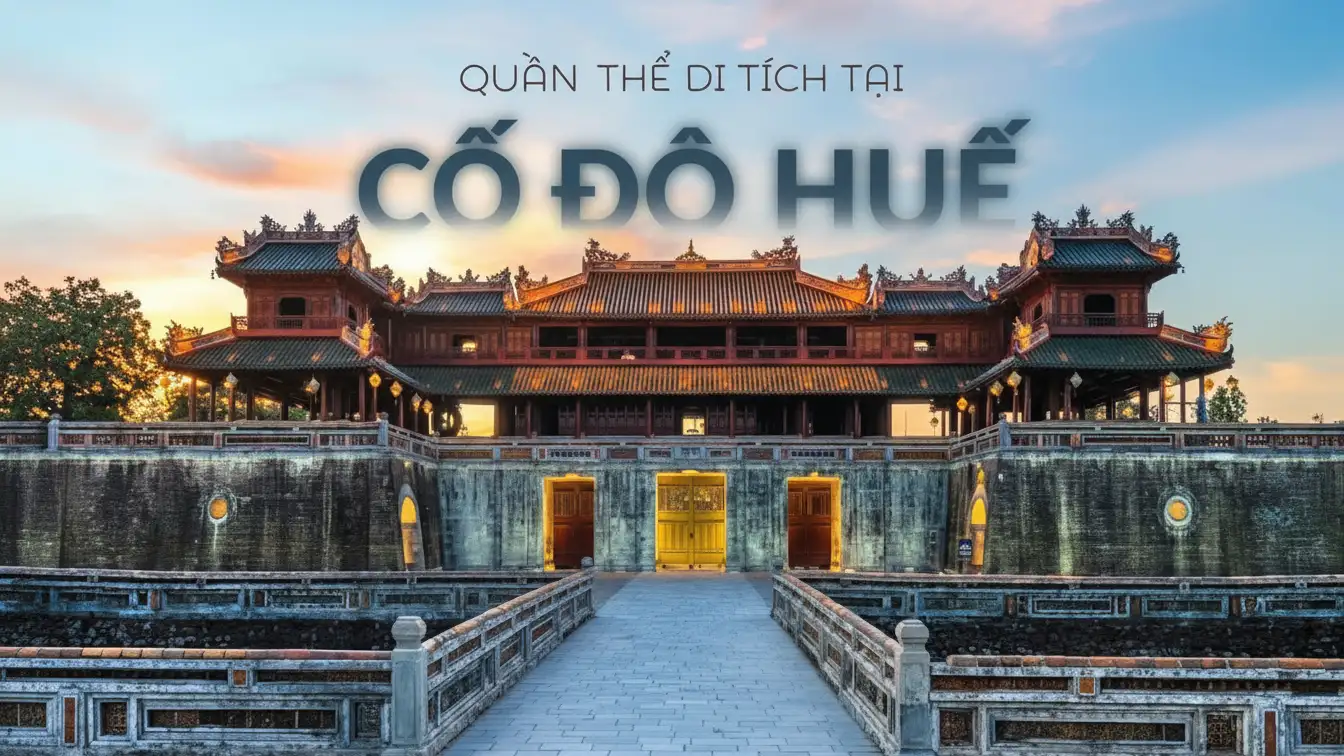
I. Introduction: Discovering Vietnam’s Imperial Past in 2026
Hue: The Ancient Capital of Imperial Vietnam
Hue (pronounced “Hway”) stands as a solemn, majestic contrast to the bustling energy of Hanoi and Ho Chi Minh City. As the former capital of Vietnam’s last ruling family, the Nguyễn Dynasty (1802–1945), Hue is saturated with history, tradition, and stunning architecture. Unlike other Vietnamese cities, Hue’s charm lies in its quiet grandeur, making it a bucket-list destination for history enthusiasts and culture seekers in 2026.
This comprehensive guide takes you beyond the basics, detailing the Top 10 Hue Attractions that showcase the city’s UNESCO-recognized heritage, serene river life, and unique northern-meets-southern cuisine. Prepare to step back in time and uncover the secrets of Vietnam’s imperial past.
II. The Heart of the Empire: The Citadel & Forbidden City (TOP 1-2)
1. The Imperial City (The Citadel)
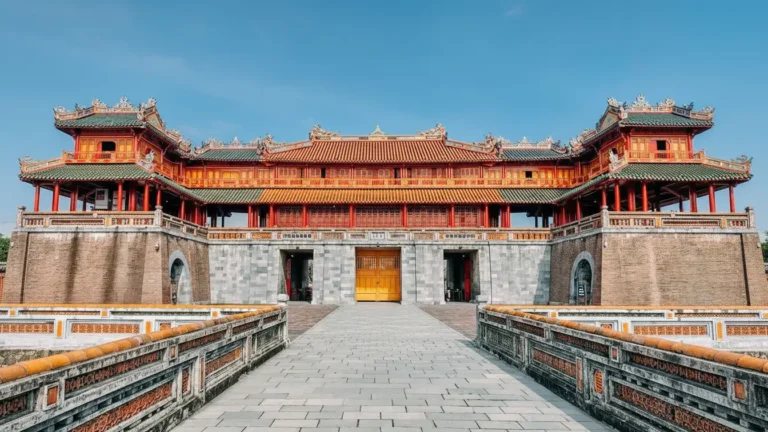
The Imperial City is the undeniable centerpiece of Hue. Surrounded by a massive square moat and thick stone walls, this vast complex served as the political, cultural, and spiritual heart of the nation for nearly a century and a half.
Resilience and Restoration in 2026: While the Citadel suffered extensive damage during the Battle of Hue in 1968, ongoing restoration efforts have beautifully revived many palaces, gates, and temples. In 2026, visitors will find a significant amount of the Purple Forbidden City—the private residence of the Emperor—rebuilt and accessible.
Must-See Areas: Be sure to visit the Ngo Mon Gate (Noon Gate), the primary entrance; the Thai Hoa Palace (Supreme Harmony Palace), where coronations and official receptions took place; and the Tours of the Inner Forbidden City, which provide the deepest insight into imperial life.
Pro Tip: Allocate a minimum of 3 to 4 hours to properly explore the complex. Hire a local guide at the entrance to fully appreciate the historical significance of the ruins and restored buildings.
2. Hue Museum of Royal Antiquities
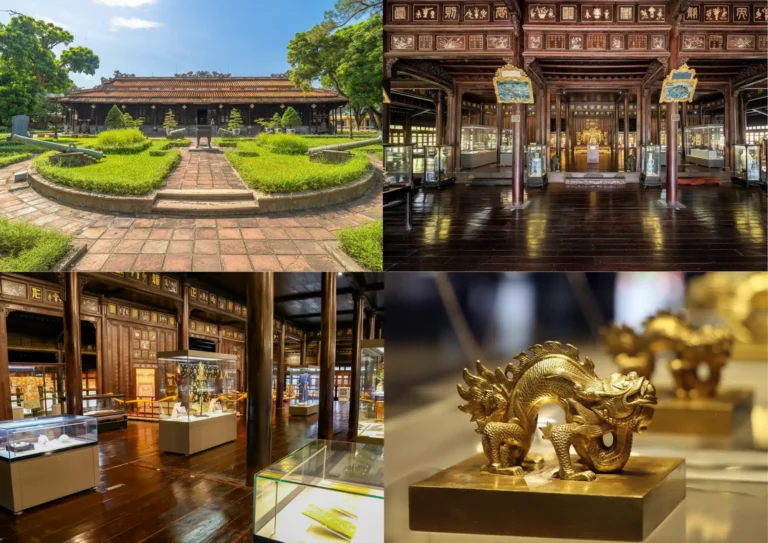
Located within the Citadel complex, specifically on the grounds of the former Long An Palace, this museum is a crucial complement to your Citadel visit.
Treasures of the Nguyễn Dynasty: The museum houses the most extensive collection of ceremonial and personal artifacts of the Nguyễn Emperors, including royal clothing, porcelain, silverware, and beautiful bronze urns.
The Experience: It’s a quiet respite from the expansive grounds of the Citadel, offering tangible pieces of the imperial history you are walking through. Look for the ornate throne and the traditional áo bào (royal robes).
III. The Tombs of the Emperors (TOP 3-5)
The Emperors’ Tombs are located southwest of Hue along the Perfume River. Each tomb is a masterpiece of landscape design, reflecting the personality and vision of the emperor buried there. They are essential stops, showcasing traditional Vietnamese geomancy (feng shui) and architecture.
3. Tomb of Khải Định
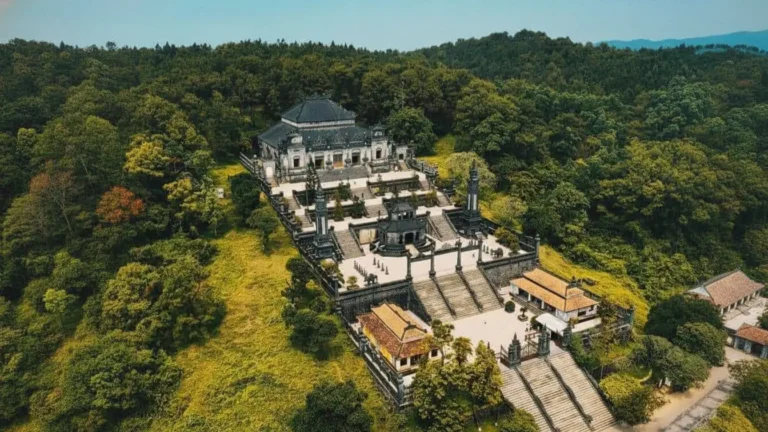
This is visually the most unique and striking of all the tombs. Built between 1920 and 1931, it blends traditional Vietnamese style with European Gothic, Roman, and Baroque elements.
A Fusion of East and West: The tomb’s exterior is almost entirely gray concrete, giving it a somber, imposing look. However, the interior is a dazzling, claustrophobic burst of color. The ceiling of the main hall is painted with dragons and clouds, and the crypt features an incredible mosaic of ceramic and glass fragments.
2026 Trend: Its highly stylized, dramatic architecture remains the most popular for modern photography and media.
4. Tomb of Minh Mạng
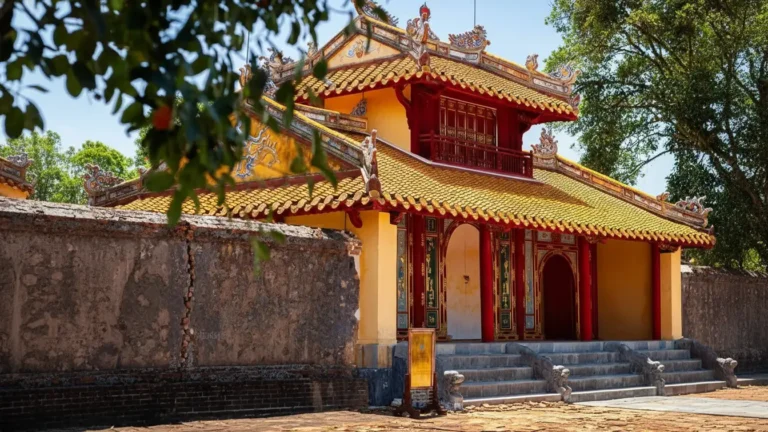
Considered the most harmonious and classical of the tombs, Minh Mạng’s resting place perfectly exemplifies traditional Confucian design, emphasizing symmetry and natural elements.
Symmetry and Serenity: The complex is laid out along a single axial path, covering a huge area of lakes, gardens, and courtyards. It evokes a deep sense of peace and balance.
Key Feature: The Three-Arched Bridge leading to the Bright Pavilion (Minh Lâu) is one of the most photographed features, perfect for capturing the tomb’s elegant architecture set against the lush landscape.
5. Tomb of Tự Đức
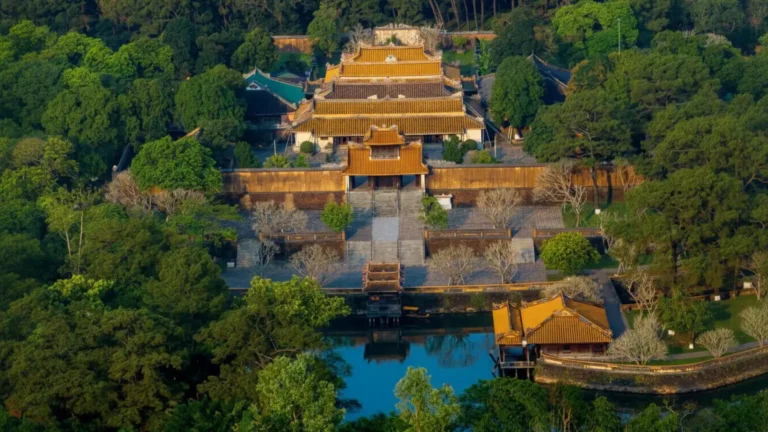
Emperor Tự Đức built his tomb not just as a final resting place, but as a second imperial residence during his lifetime. The compound is vast and heavily features tranquil pine forests and lakes.
The Poet’s Retreat: The design reflects Tự Đức’s gentle, scholarly, and melancholic personality. The Lưu Khiêm Lake and the Khiêm Cung Pavilion are highlights, designed for the Emperor to write poetry and fish.
Practical Tip: Due to its scale, allow extra time for Tự Đức’s tomb. It feels more like a scenic park than a cemetery.
IV. River Life and Spiritual Sites (TOP 6-8)
6. Thiên Mụ Pagoda (Pagoda of the Celestial Lady)
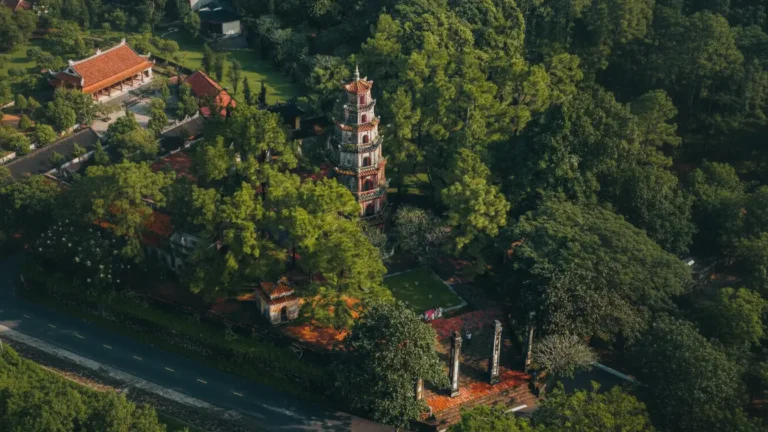
Located on a hill overlooking the Perfume River, this seven-story octagonal tower is the unofficial symbol of Hue and the city’s most important spiritual site.
Hue’s Iconic Landmark: Built in 1601, the pagoda is the tallest religious building in Vietnam. Its commanding view of the river and surrounding landscape is spectacular, especially at sunset.
Historical Significance: On the grounds, you can see the Austin car driven by Thích Quảng Đức, the monk who famously immolated himself in 1963 in Saigon to protest the persecution of Buddhists.
7. Dragon Boat Ride on the Perfume River
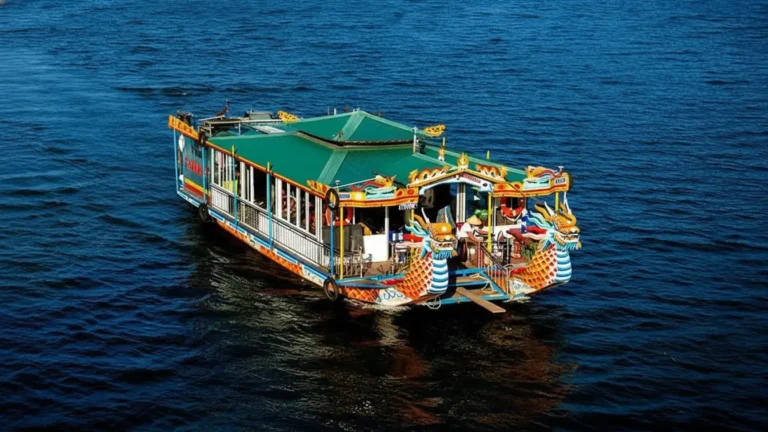
The Sông Hương (Perfume River) runs through the city and is the central vein connecting the Citadel, the tombs, and the pagodas. A trip on a traditional dragon boat is a quintessential Hue experience.
A Tranquil Perspective: This is the best way to travel to the Emperors’ Tombs or Thiên Mụ Pagoda, offering serene views of the surrounding hills and local life on the water.
2026 Experience: Book a tour that includes dinner and traditional folk music on the boat, especially popular in the evening as the city lights up.
8. Thanh Toan Bridge (Cầu Ngói Thanh Toàn)
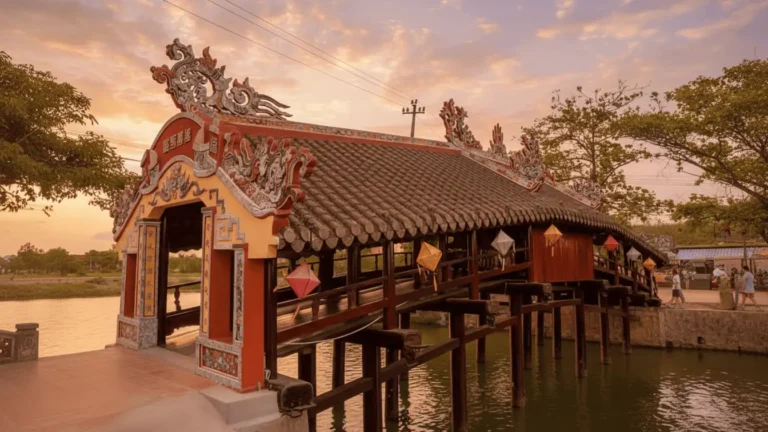
A short trip outside the city, this beautifully preserved, roofed wooden bridge dates back to 1776 and crosses a quiet village canal.
A Hidden Gem of Rural Life: It’s an excellent example of traditional Japanese-style architecture that’s popular in Central Vietnam. The bridge also houses a small shrine.
Local Experience: The nearby village market and rice paddies offer a peaceful contrast to the tourist density of the Citadel, providing a genuine glimpse into Central Vietnamese rural life.
V. Culinary Delights & Modern Life (TOP 9-10)
9. Hue Imperial Street Food
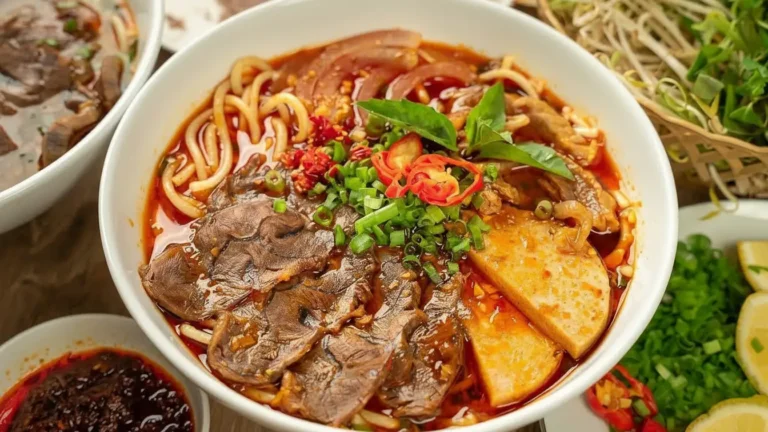
Hue cuisine is renowned throughout Vietnam for its delicate flavors, small portions, and royal history—many dishes were originally created for the Emperors.
Taste the Cuisine of Royalty: Hue is the birthplace of Bún Bò Huế, a spicy, fragrant, large rice noodle soup (often considered superior to Phở by local food critics). Also, be sure to try:
Bánh Bèo (small steamed rice cakes)
Bánh Khoái (a crispy, savory pancake)
Nem Lụi (grilled pork skewers).
Foodie Tip: The Dong Ba Market is the best place to sample cheap, authentic Hue specialties. Look for dedicated Bún Bò Huế stalls outside the main tourist areas for the most authentic experience.
10. Walk the Ancient Walls at Night
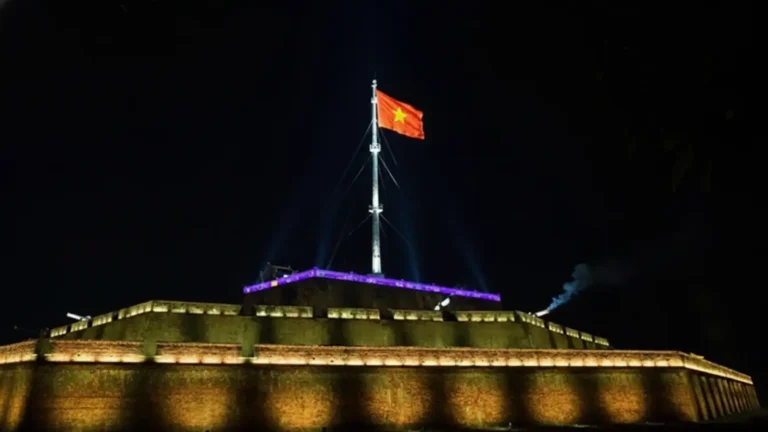
While the Citadel is stunning by day, the city’s ancient defenses take on a new, dramatic atmosphere after sunset.
Night time Atmosphere: The area around the Ngo Mon Gate and the Flag Tower is beautifully illuminated. The moats and walls cast deep shadows, and the air is cool.
The Experience: Walk along the illuminated eastern and western walls outside the moat for a free, atmospheric experience that few tourists prioritize, giving you a unique photographic opportunity.