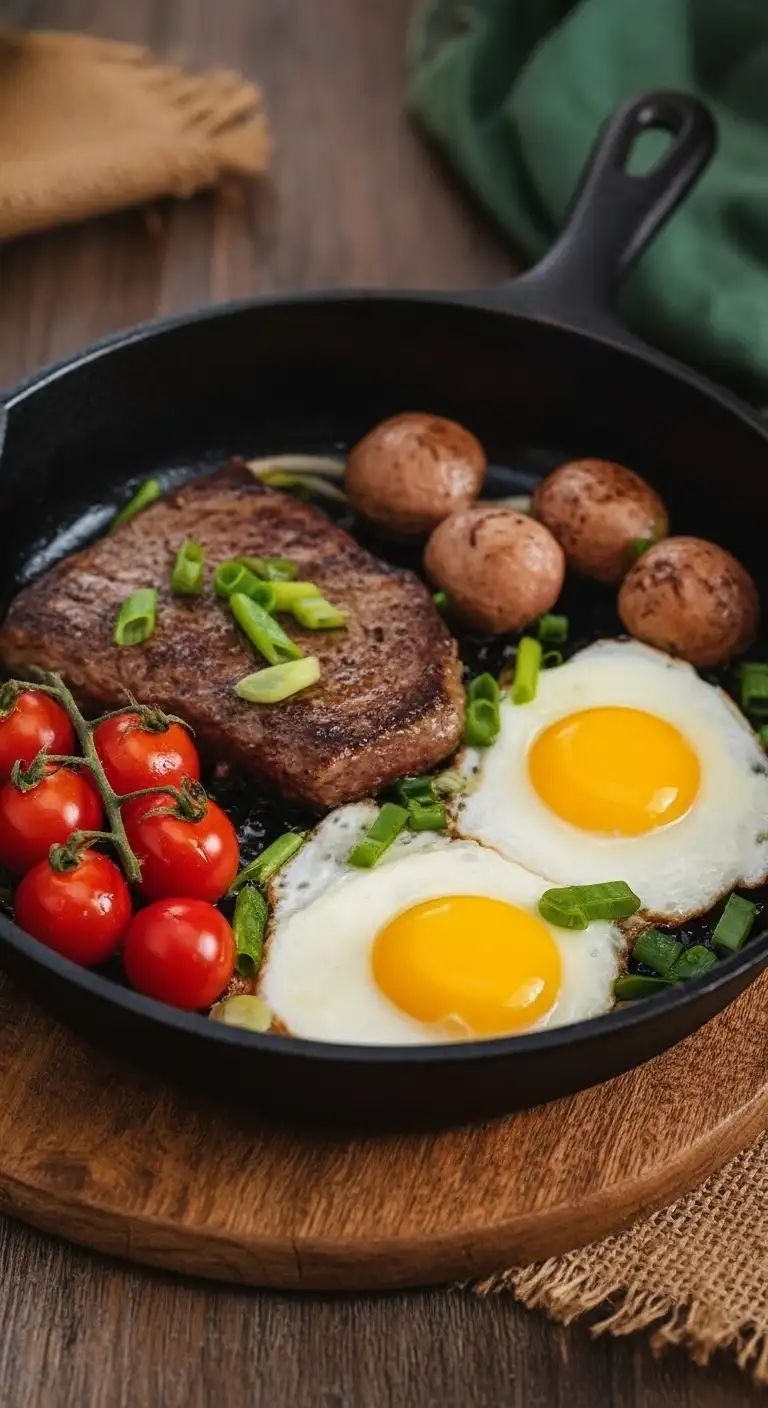
Bò Né is one of Vietnam’s most exciting and hearty street food breakfasts, a direct and delicious fusion of French and Vietnamese culinary traditions. Served sizzling on a hot cast-iron skillet, this dish is a sensory experience defined by the aromatic smoke of butter-seared beef and a perfectly runny fried egg.
The Basics of Bò Né
What is it?
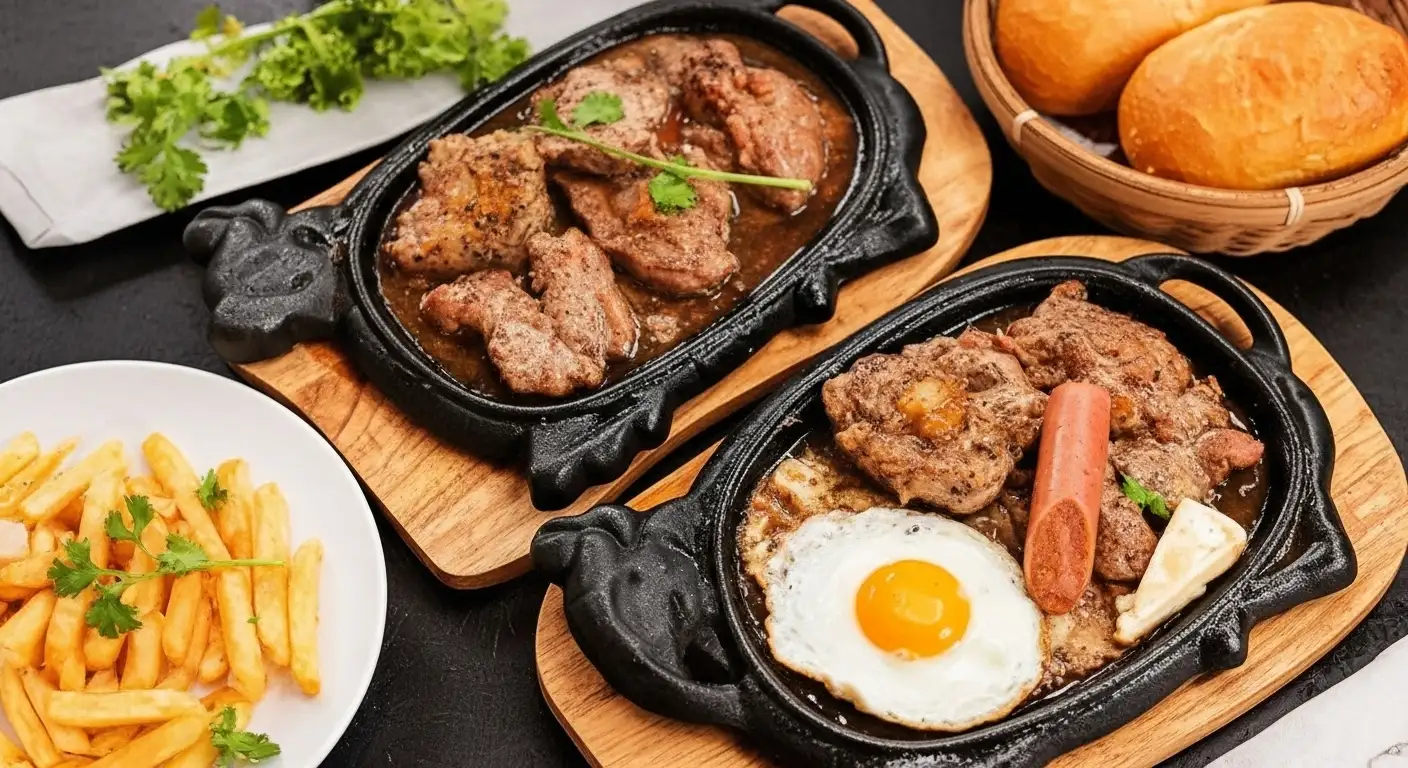
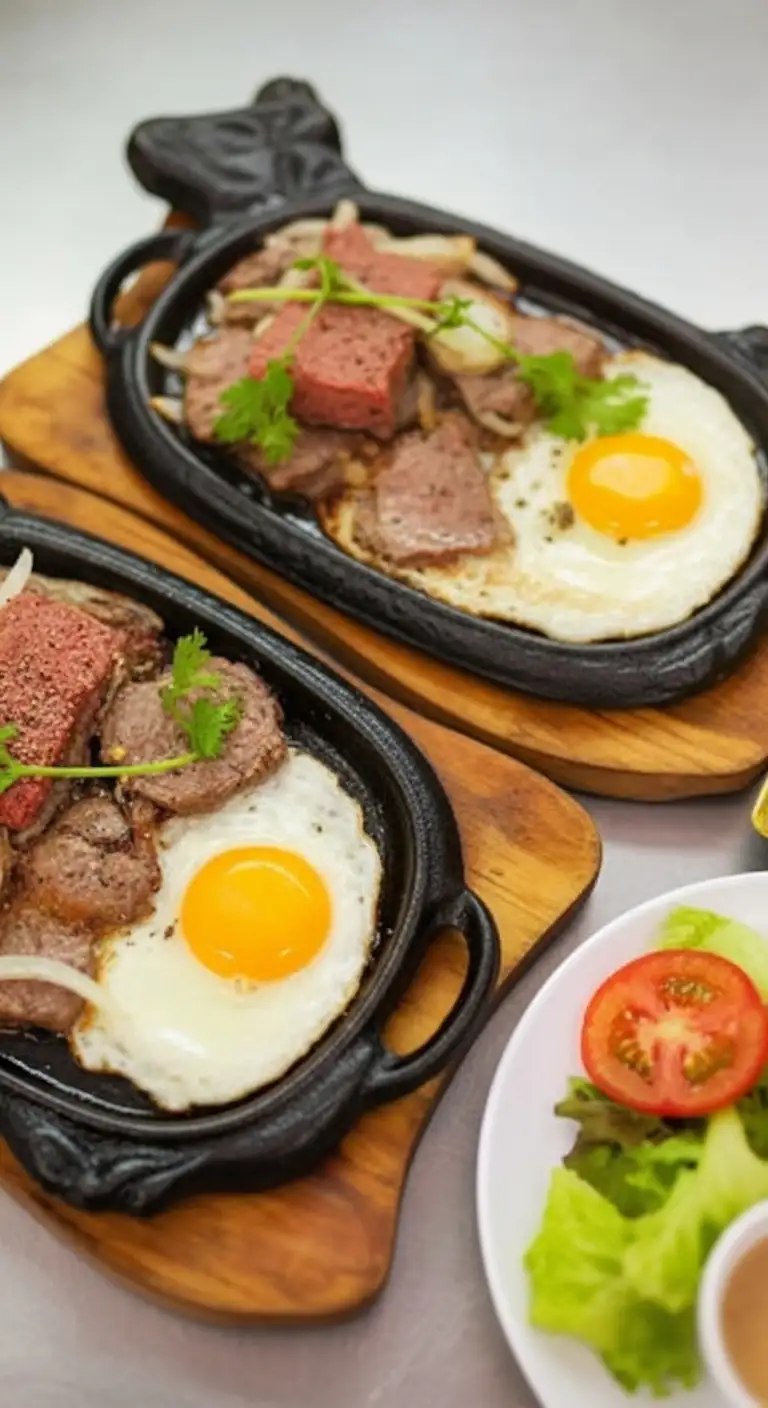
Bò Né is a Vietnamese take on steak and eggs, served on a piping hot, typically cow-shaped, cast-iron skillet. The dish consists of thin slices of marinated beef, a sunny-side-up egg, and a dollop of pâté, all cooked in butter and oil.
The Name Origin:
The name literally translates to “Dodging Beef.” Bò means “beef,” and Né means “to dodge” or “to stand back.” This amusing name comes from the act of diners instinctively leaning back or “dodging” the hot oil and sauce that violently splutters and sizzles when the scorching plate is delivered to the table.
Ingredients and Flavor:
Beef: Thinly sliced (often skirt or flank steak), marinated in a savory blend of Vietnamese staples like soy sauce, oyster sauce, fish sauce, garlic, and black pepper.
The Plate: Sizzling beef, a fried egg (often trứng ốp la or sunny-side-up), and a generous smear of savory pork liver pâté.
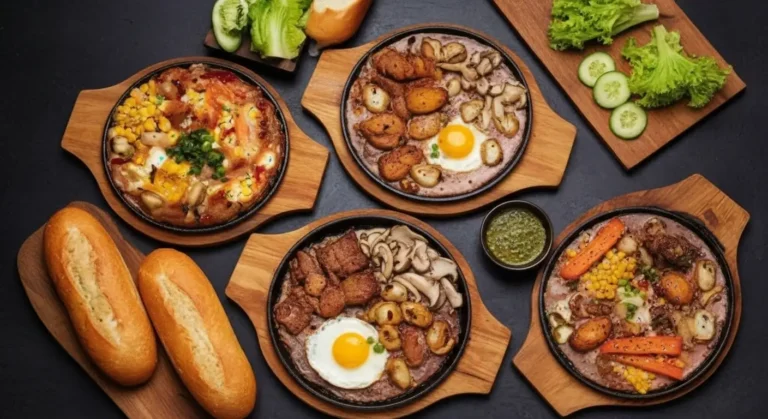
Accompaniments: Always served with a crusty, warm Vietnamese baguette (bánh mì) and a small side of fresh vegetables like sliced cucumbers, tomatoes, and lettuce.
Origin:
The dish has roots in French colonial influence (specifically bifteck or steak and pâté), but was adapted by Vietnamese cooks, notably in coastal Southern cities like Phan Thiết or Vũng Tàu, into an affordable, high-protein street food breakfast for workers.
Variations of Bò Né
While the core of Bò Né remains steak, egg, and pâté, vendors and regions offer several popular additions:
Bò Né Thường (Standard Bò Né): The classic version with marinated beef, a fried egg, and pâté.
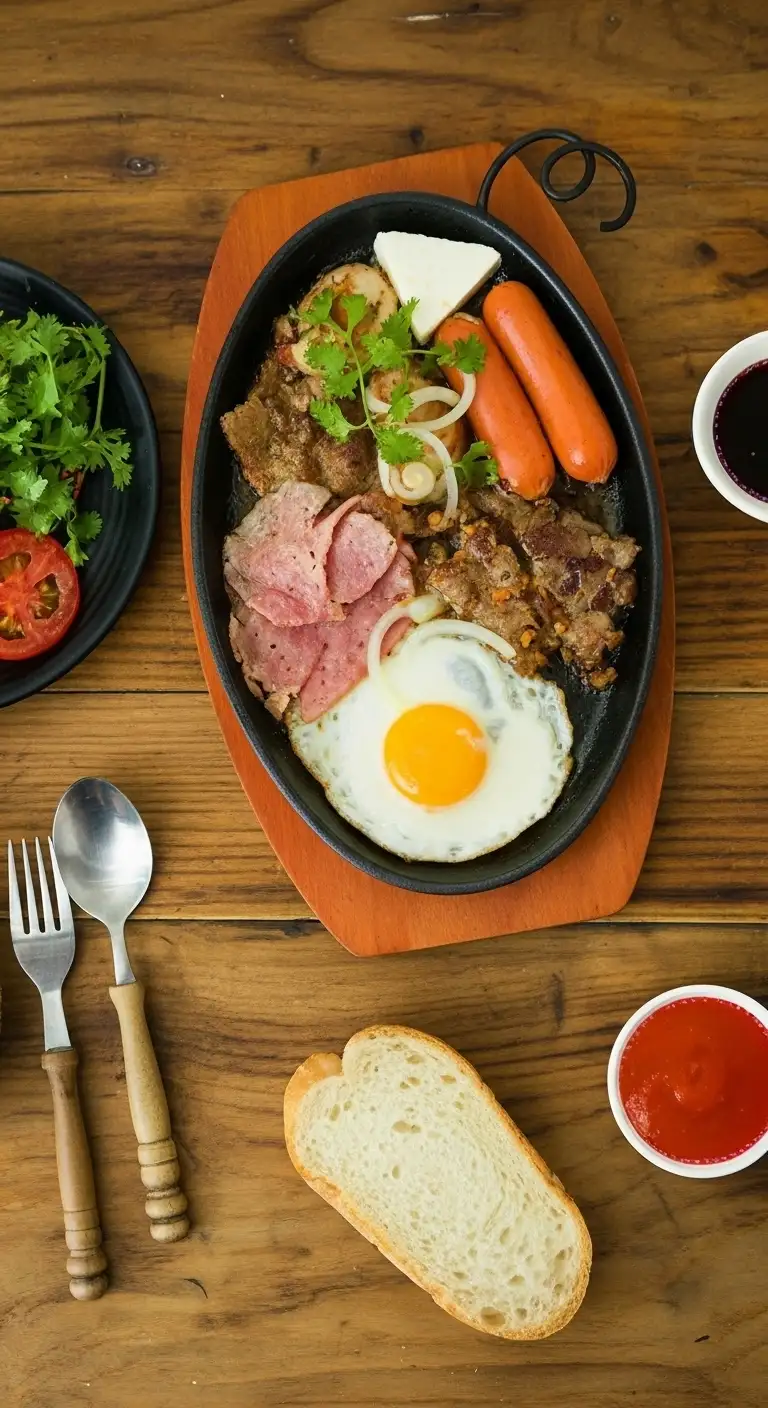
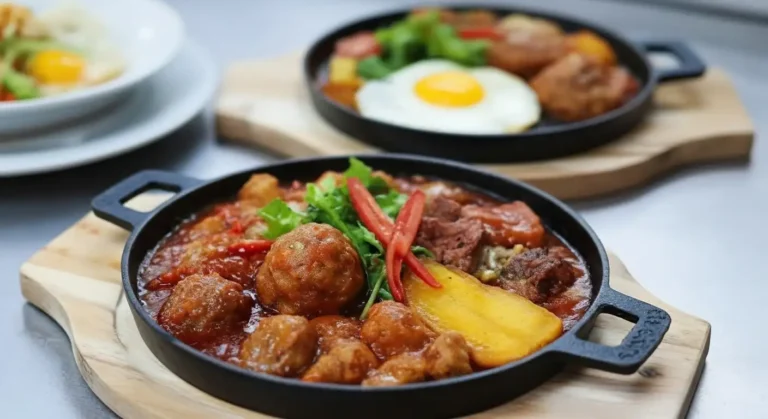
Bò Né Đặc Biệt (Special Bò Né): This deluxe version adds extra proteins to the skillet. Common additions include:
Vietnamese sausages (xúc xích or lạp xưởng)
Vietnamese meatballs (xíu mại)
A portion of canned sardines in tomato sauce
Bít Tết (Vietnamese Beefsteak): This term is often used interchangeably with Bò Né in some regions, but technically refers to a thicker, more traditional beefsteak cut served on a hot plate, sometimes with a brown sauce and French fries—closer to the French steak frites.
Bánh Mì Chảo (Bread in a Pan): A related Northern dish. While similar (served on a skillet with bread), it typically features a more tomato-based, less buttery sauce and may contain more European-style ham/sausages and no beef, or simply a thin steak.
How to Eat Bò Né
Bò Né is an interactive dish where the bread is your main tool.
Preparation: As the skillet arrives, the key is to allow the egg yolk to stay slightly runny. Diners often add a sprinkle of fresh cracked pepper and perhaps a splash of chili sauce (tương ớt, often Sriracha or a local equivalent) and a touch of soy sauce to the plate.
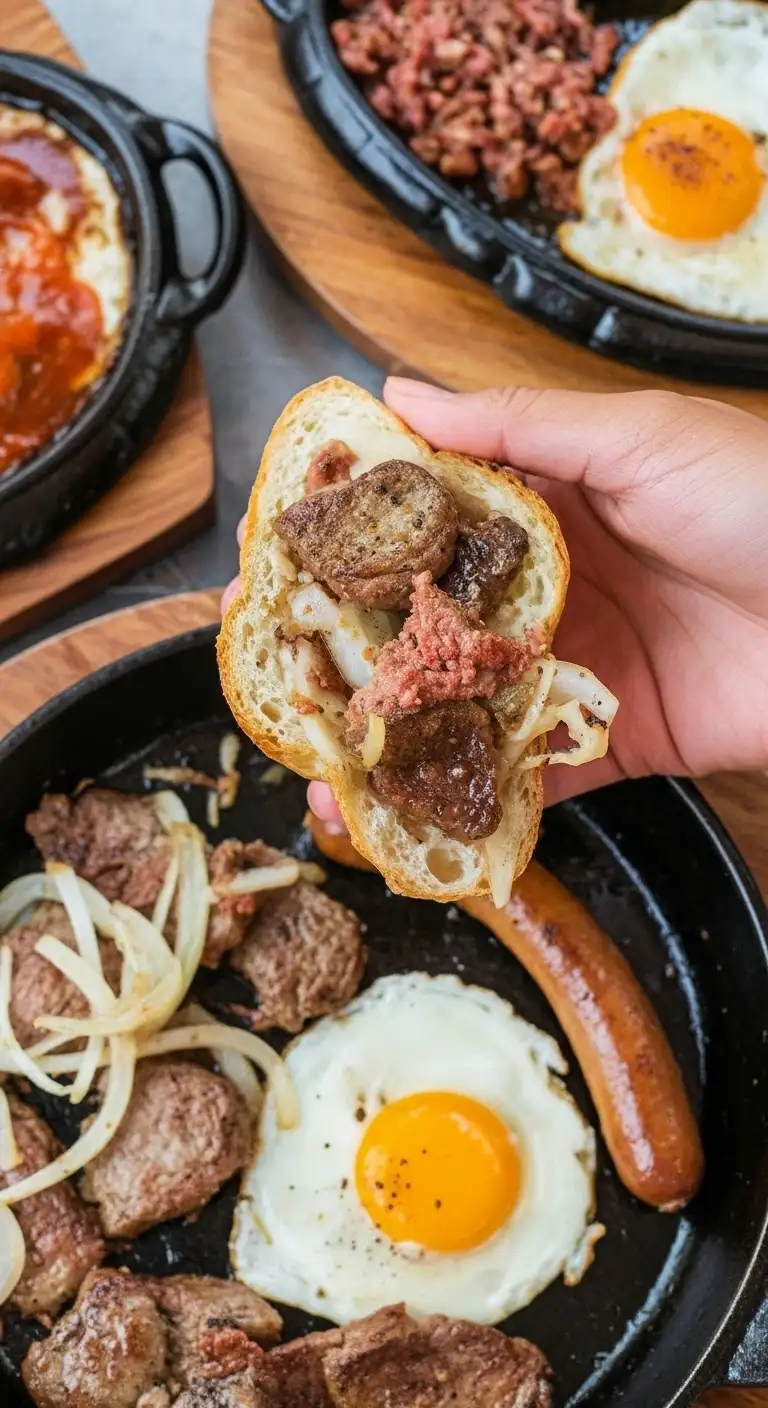
Dipping the Bread: The most crucial step! Tear off pieces of the baguette and use them to sop up the creamy mixture of the runny egg yolk, the melting butter, the savory beef marinade, and the rich pâté. This is the heart of the dish.
The Perfect Bite: Build mini-sandwiches: take a piece of baguette, dip it in the sauce, then pile on a slice of beef, a scoop of pâté, and a bit of the egg and fresh vegetables (cucumber/tomato) for crunch and balance.
Enjoy the Sizzle: The dish is intended to be eaten while it is still sizzling, ensuring the beef remains tender and the egg yolk creamy.
Regional Differences
While Bò Né is popular across Vietnam, subtle differences in flavor and terminology exist, especially between the North and South.
| Region | Terminology & Key Characteristics | Flavor Profile Focus |
|---|---|---|
| South (Saigon/Mekong Delta) | Primarily called Bò Né. Known for the classic, rich, buttery combination of beef, egg, and a liberal use of pâté. Often served with simple accompaniments like cucumber and tomato. | Rich, Buttery, and Savory. Reflects the South's generally bolder, richer, and sweeter culinary preferences (though Bò Né is savory). |
| North (Hanoi) | More commonly referred to as Bít Tết (Beefsteak) or Bánh Mì Chảo (Bread in a Pan). The skillet dish may feature a thinner steak or simply a focus on ham, sausage, and eggs, often with a more prominent tomato-based sauce. | Balanced and Savory. Northern cuisine tends to favor more subtle and balanced flavors, and their version may be less heavy on the butter or pâté. |
| Central (Nha Trang/Phan Thiết) | The coastal city of Phan Thiết is often cited as the origin, making the dish highly popular in the Central and South-Central regions. Their version strongly features the sizzling cast-iron skillet tradition. | Well-Spiced. Central Vietnamese food is known for its strong, often spicy, flavors, which may translate to a bolder marinade for the beef. |