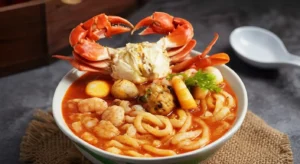
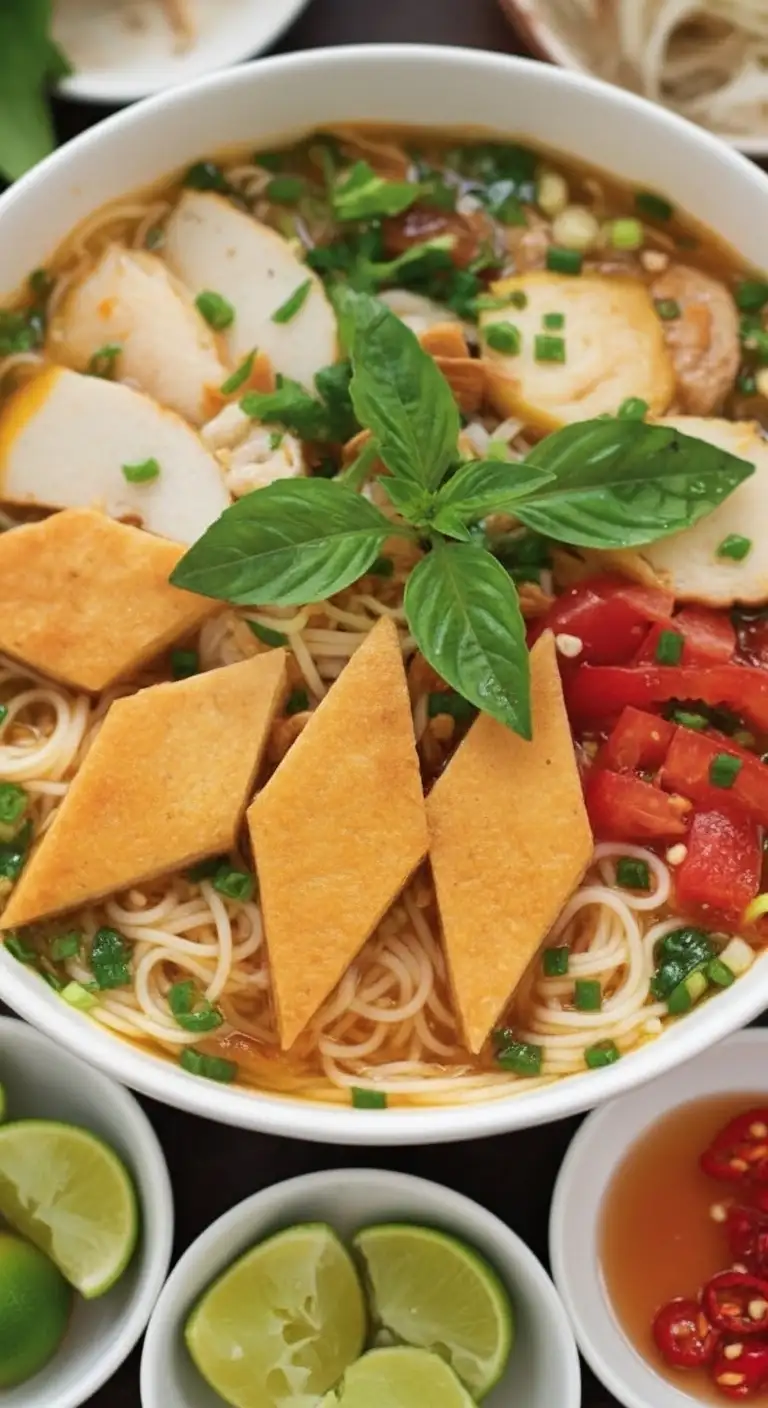
Bún Cá Châu Đốc (pronounced boon kah chou dock) is a signature dish originating from Châu Đốc, a border city in the An Giang province of the Mekong Delta in Southern Vietnam. Unlike other Vietnamese fish noodle soups, this dish is a vibrant, earthy, and highly aromatic delicacy, showcasing the unique blend of Vietnamese, Khmer, and Cham culinary influences found in this border region.
The Basics of Bún Cá Châu Đốc
What is it?
It is a vermicelli noodle soup built around freshwater fish, distinguished by its unique broth and colorful assortment of fresh regional vegetables.
The essential ingredients are:
Bún: Fresh rice vermicelli noodles.
Cá: Flaky, tender fish meat (traditionally snakehead fish – cá lóc).
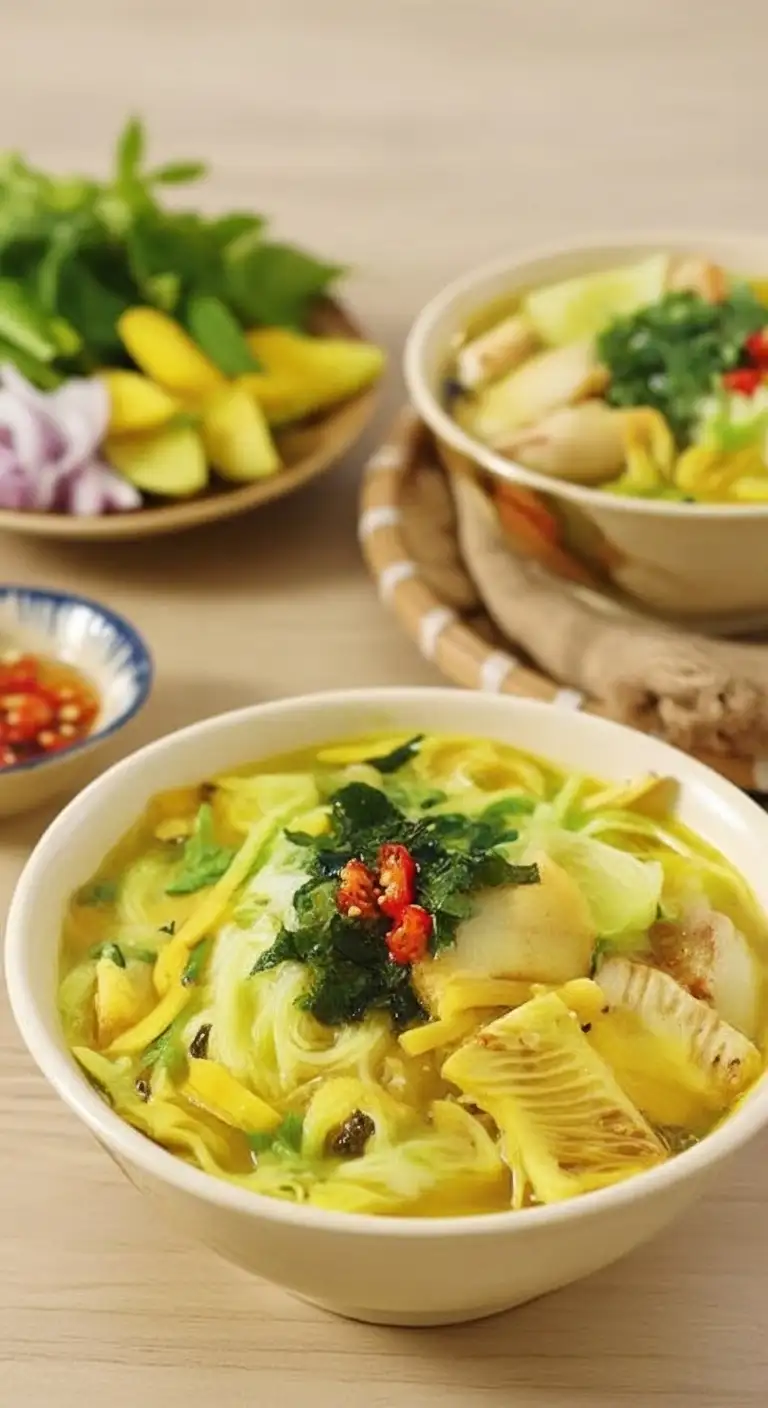
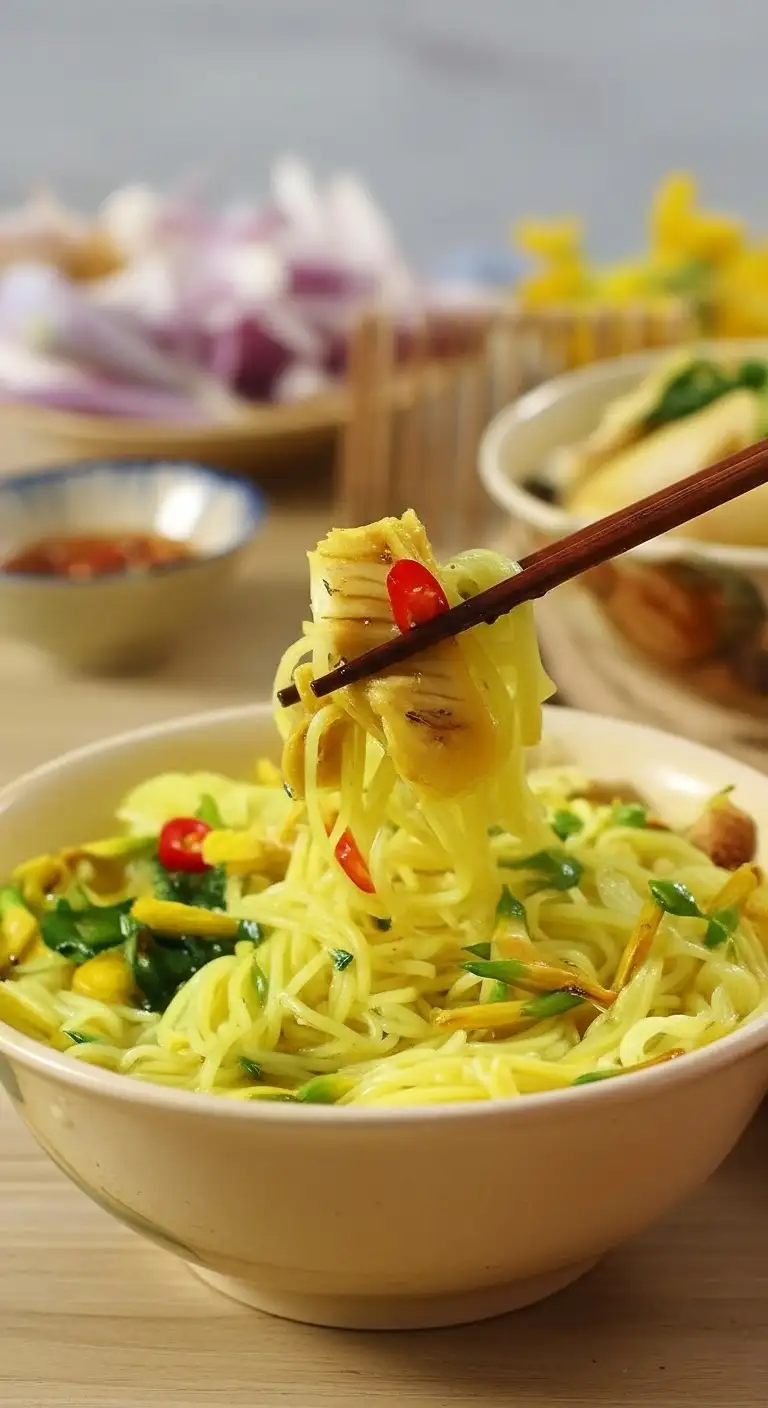
The Broth: The characteristic golden-yellow broth is infused with two key aromatic ingredients: Turmeric (Nghệ) and a rhizome called Fingerroot (Ngải Bún), which gives the soup its earthy, distinctive perfume.
Origin and Culture:
The dish’s roots trace back to the Khmer community, evolving in Châu Đốc to incorporate local Vietnamese ingredients and flavors, particularly the famed, pungent fermented fish paste (Mắm) of the region.
The broth’s golden color is unmistakable, and its flavor is a complex balance of savory, sweet, and aromatic notes, quite different from the clear, simple broths of Northern soups.
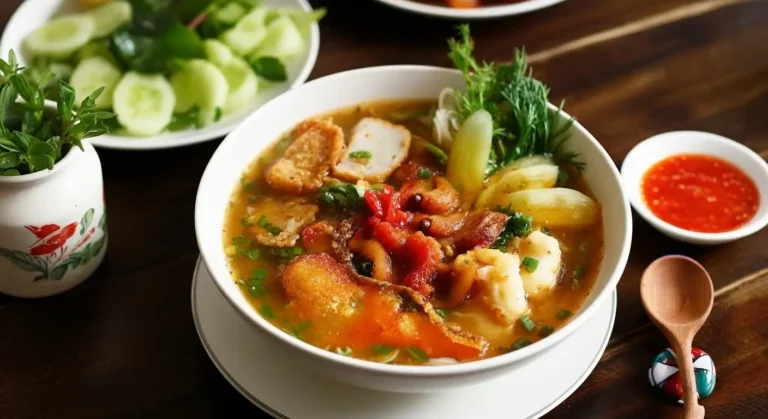
The Components of Bún Cá Châu Đốc
Bún Cá Châu Đốc is a medley of textures and flavors, defined by its preparation methods and unique garnish.
| Component | Vietnamese Name | Description |
|---|---|---|
| The Star Topping | Cá Lóc (Snakehead Fish) | The fish is typically poached or steamed, flaked, and then sautéed with turmeric (nghệ), ginger, and lemongrass to develop a beautiful golden hue and intensify the flavor, while firming up the flesh. |
| The Broth | Nước Lèo | The base is made from fish bones and often pork bones, then seasoned with turmeric and Fingerroot (Ngải Bún). Crucially, a small amount of fermented fish paste (Mắm Ruốc or Mắm Cá Linh) is added to provide a powerful, deep umami flavor that defines the Mekong Delta cuisine. |
| The Signature Garnish | Bông Điên Điển (Sesbania Grandiflora Flower) | A highly unique, bright yellow flower that grows in the Mekong Delta. It is served raw or lightly blanched, adding a slight bitterness and unique crunch that is essential to the authentic Bún Cá Châu Đốc experience. |
| Protein Add-on | Thịt Heo Quay (Roast Pork) | A common, surprising addition in Châu Đốc is slices of crispy-skinned roast pork, which adds richness and a textural contrast to the soft fish and noodles. |
| Common Veggies | Rau Ghém (Herbs and Vegetables) | A large plate of finely shredded vegetables, including banana flower (bắp chuối bào), water spinach (rau muống chẻ), bean sprouts (giá), and various herbs. |
How to Eat Bún Cá Châu Đốc
The consumption of Bún Cá Châu Đốc is a ritual of balancing its intense flavors and textures.
Prep the Plate: When the bowl arrives, it’s typically a generous serving of noodles, fish, and broth, alongside a separate large plate of fresh vegetables and herbs.
Add Greens: Toss a handful of the shredded vegetables and the distinctive yellow Bông Điên Điển flowers into the hot broth. This slightly wilts them and integrates their flavor and crunch.
The Dipping Sauce: This is essential for the fish. The fish is almost always accompanied by a small side bowl of fresh chili salt with lime or kumquat juice (Muối Ớt Chanh).
Dip the pieces of fish and roast pork into this tangy, spicy, and salty mixture before taking a bite with the noodles and broth. The dipping sauce provides a necessary sharp contrast to the rich, earthy soup.
Enjoying the Broth: The broth is meant to be drunk straight from the spoon. Savor the warm, savory, and aromatic flavor profile of the fingerroot and turmeric.
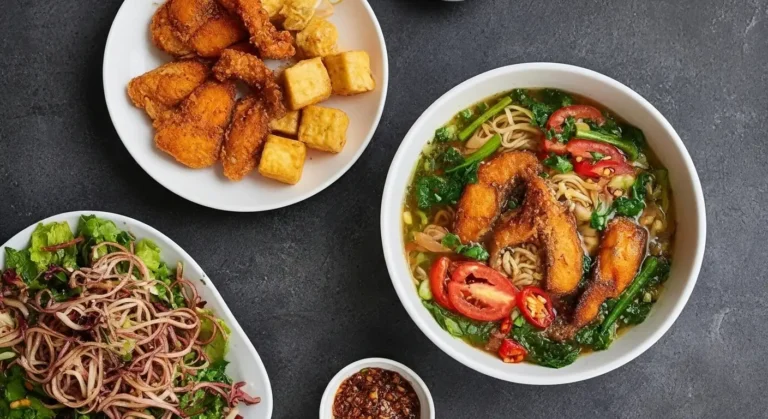
Regional Differences in Bún Cá
While Bún Cá Châu Đốc is a distinct Southern (Mekong Delta) specialty, it is important to note how fish noodle soups differ across Vietnam. The “Bún Cá” name means very different things depending on the region.
| Region | Dish Name | Key Characteristics | Broth/Flavor Profile |
|---|---|---|---|
| South (Mekong Delta) | Bún Cá Châu Đốc | Uses Snakehead fish, often served with Roast Pork and the signature Sesbania flowers. | Earthy, Aromatic, Umami. Golden broth from Turmeric and Fingerroot (Ngải Bún), with a deep flavor from Fermented Fish Paste (Mắm). |
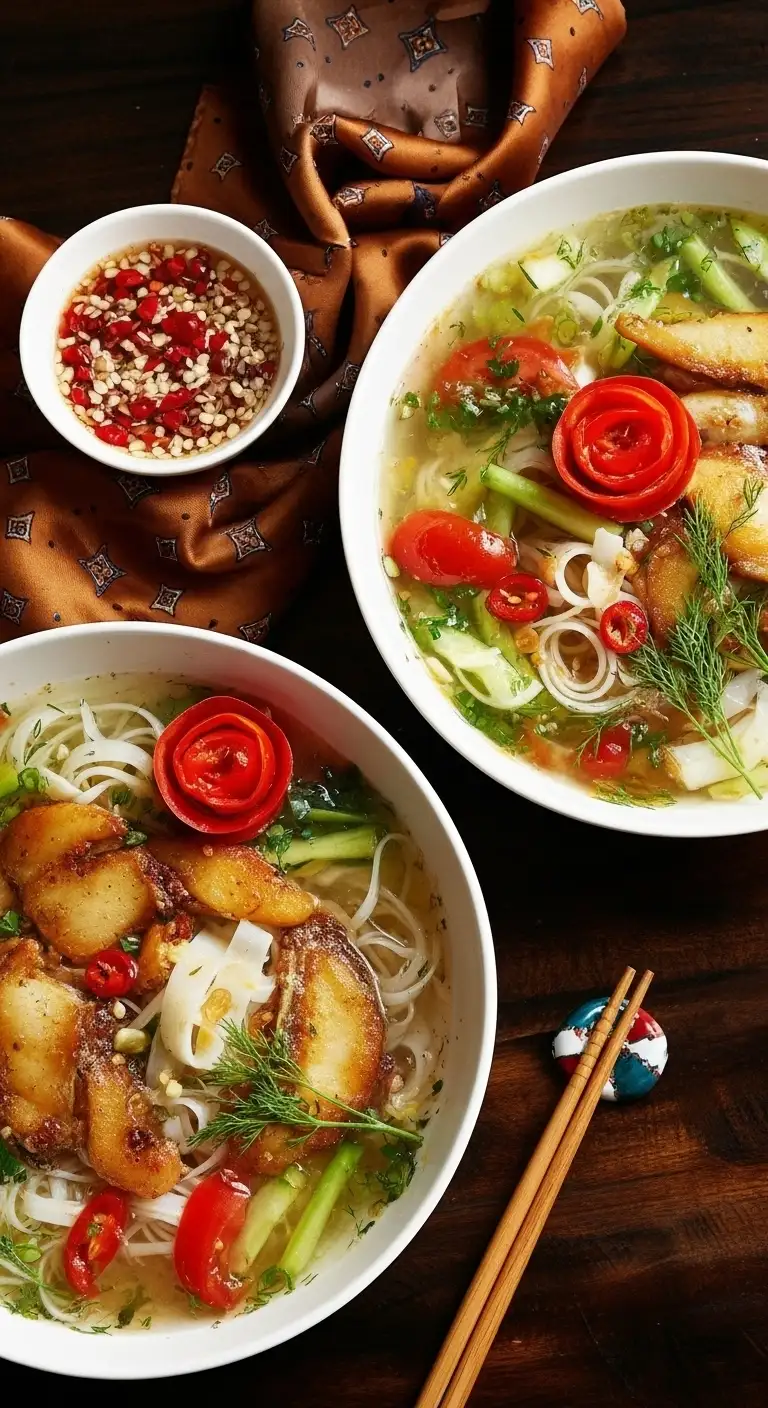
| North (Hanoi) | Bún Cá Chiên (Hanoi) | Uses deep-fried fish fillets (often carp or tilapia). The fish is the centerpiece and is fried until crispy. | Light, Tangy, Clear Broth. Broth is often clear, flavored with tomatoes, dill, and vinegar (dấm bỗng) for a distinctly sour profile. |
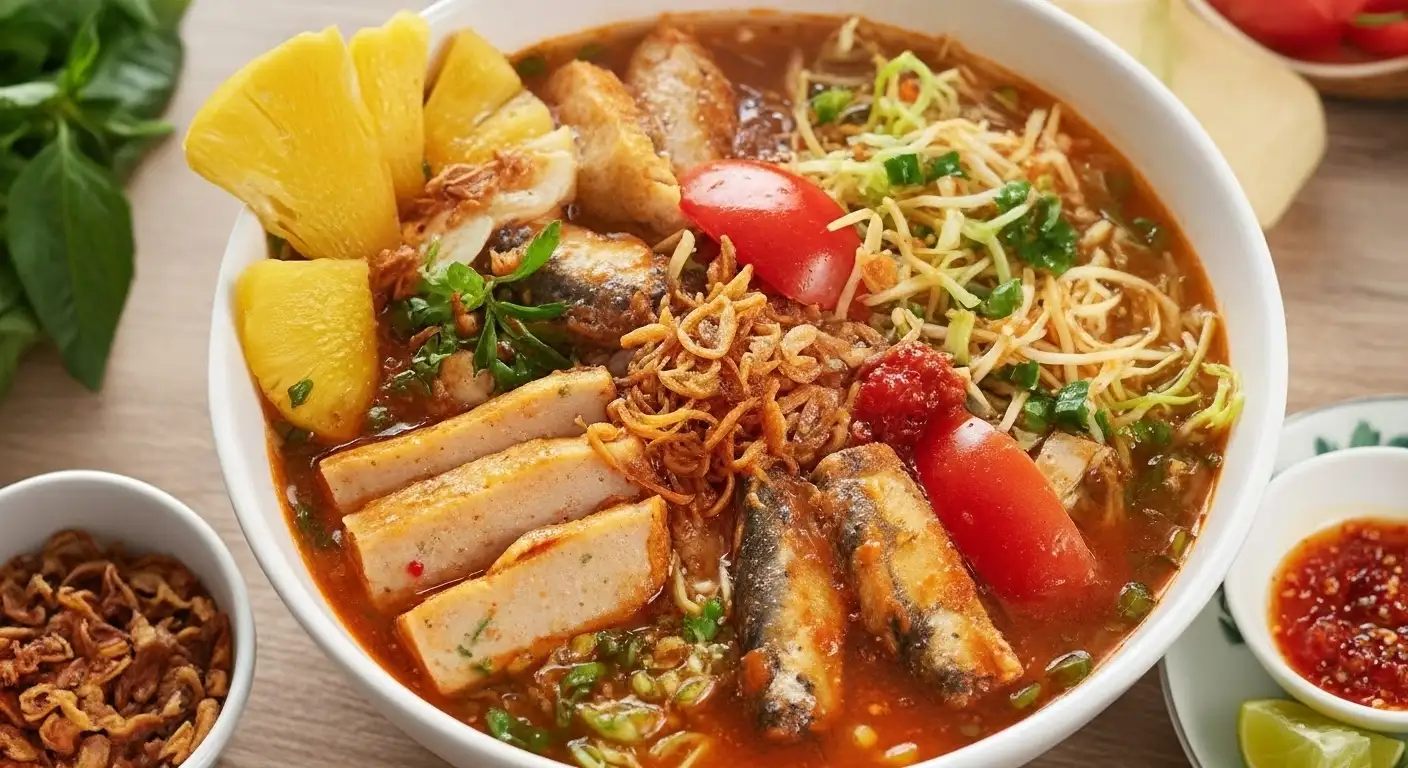
| Central (Nha Trang, Da Nang) | Bún Cá Sứa (Nha Trang) | Often incorporates jellyfish (sứa) and different kinds of fish cakes/meatballs. The fish is not the only star. | Clean, Savory, Seafood-Focused. Broth is clean and sweet, focusing on the flavor of fresh seafood (fish bones) and often topped with fresh pineapple for a mild sweetness. |