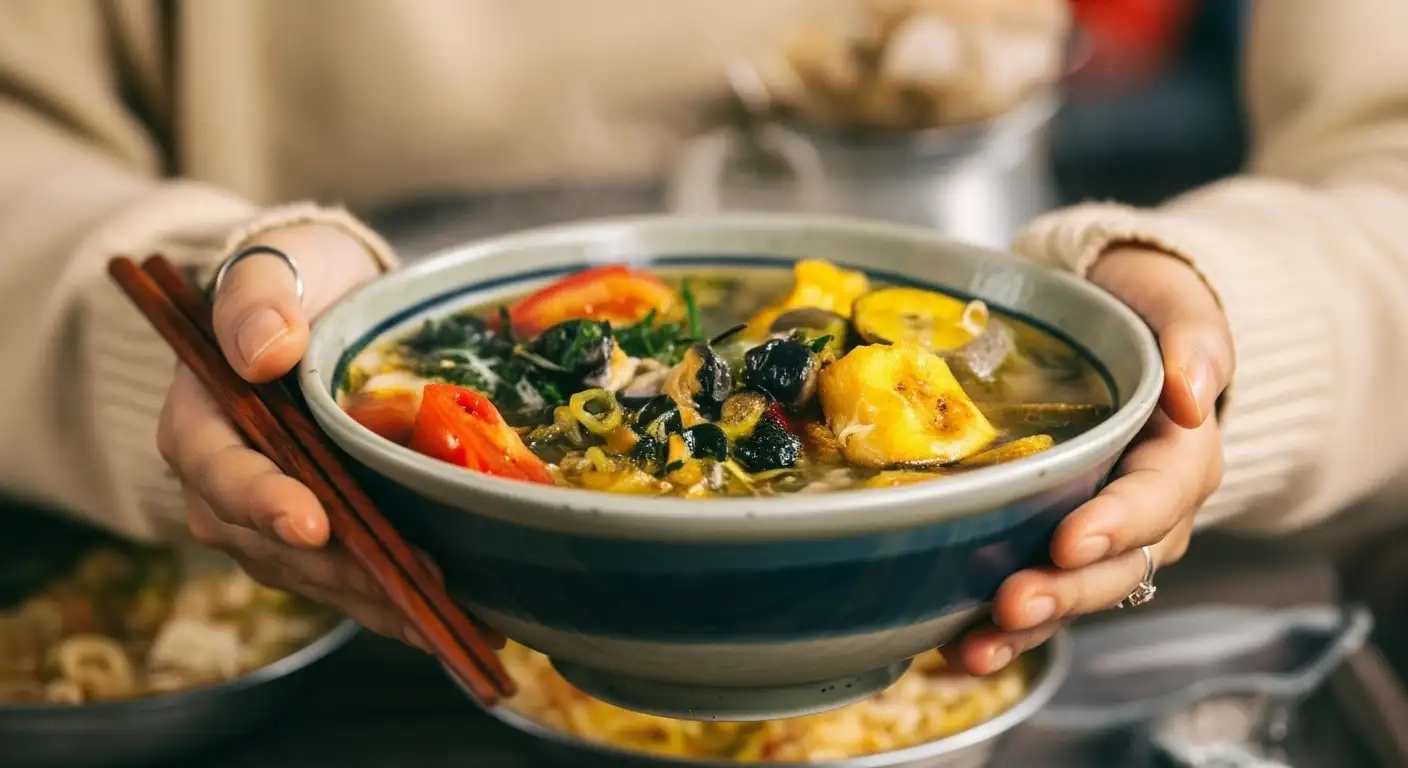
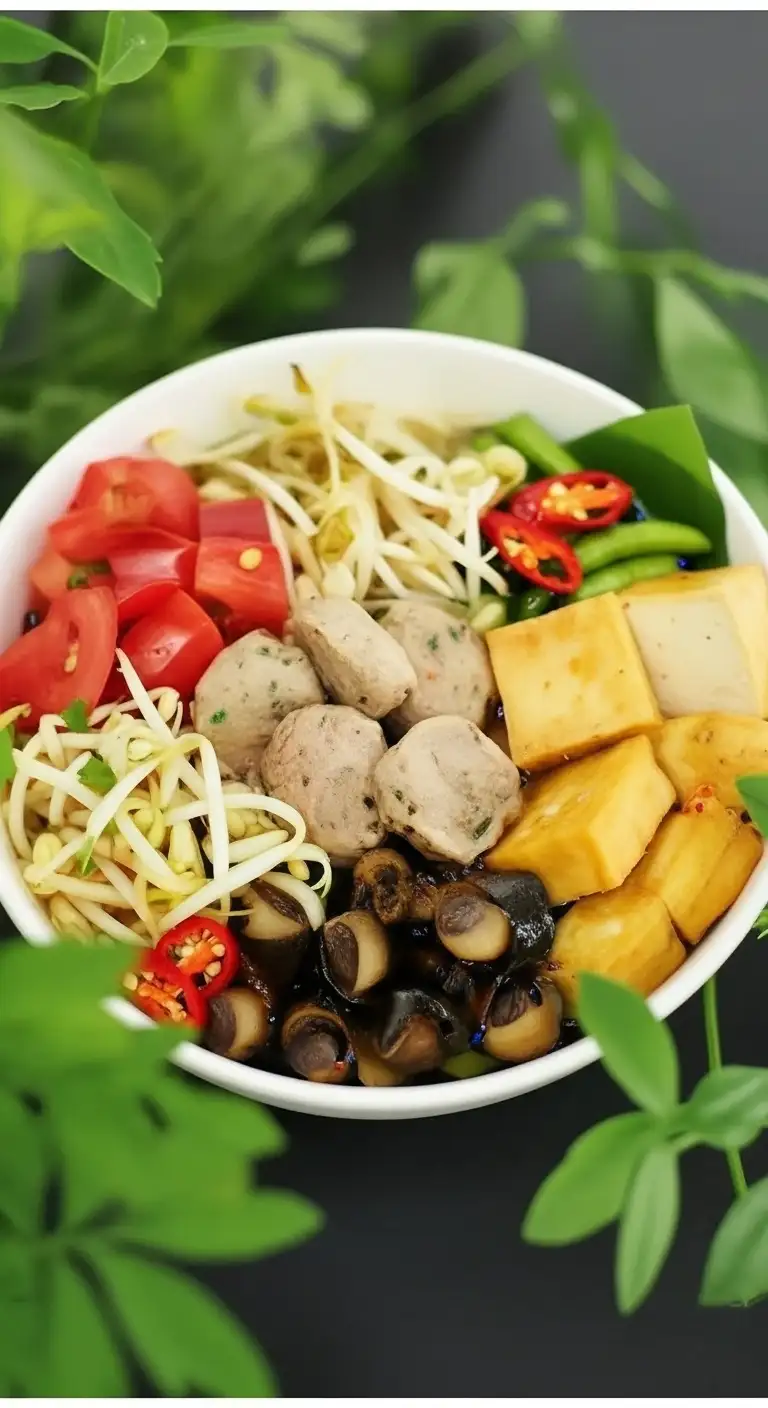
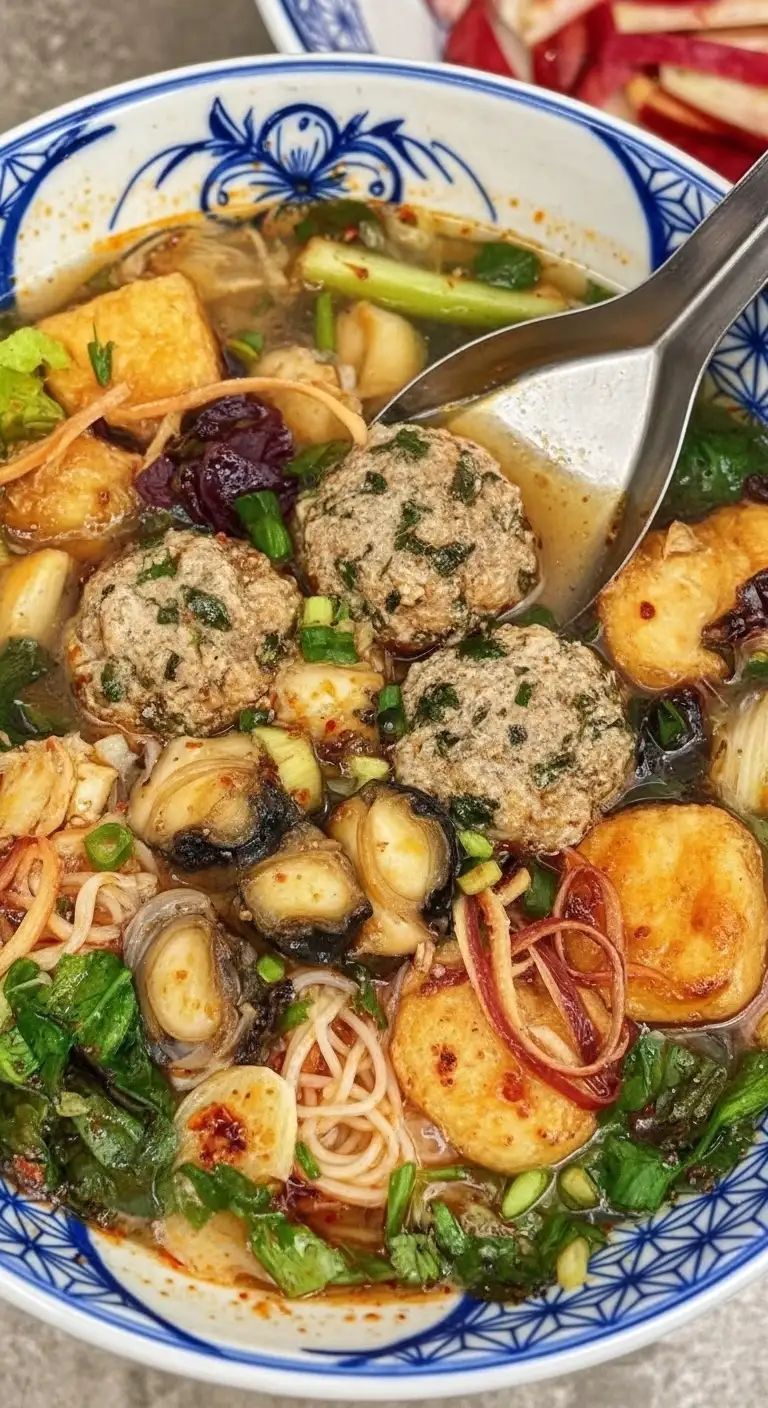
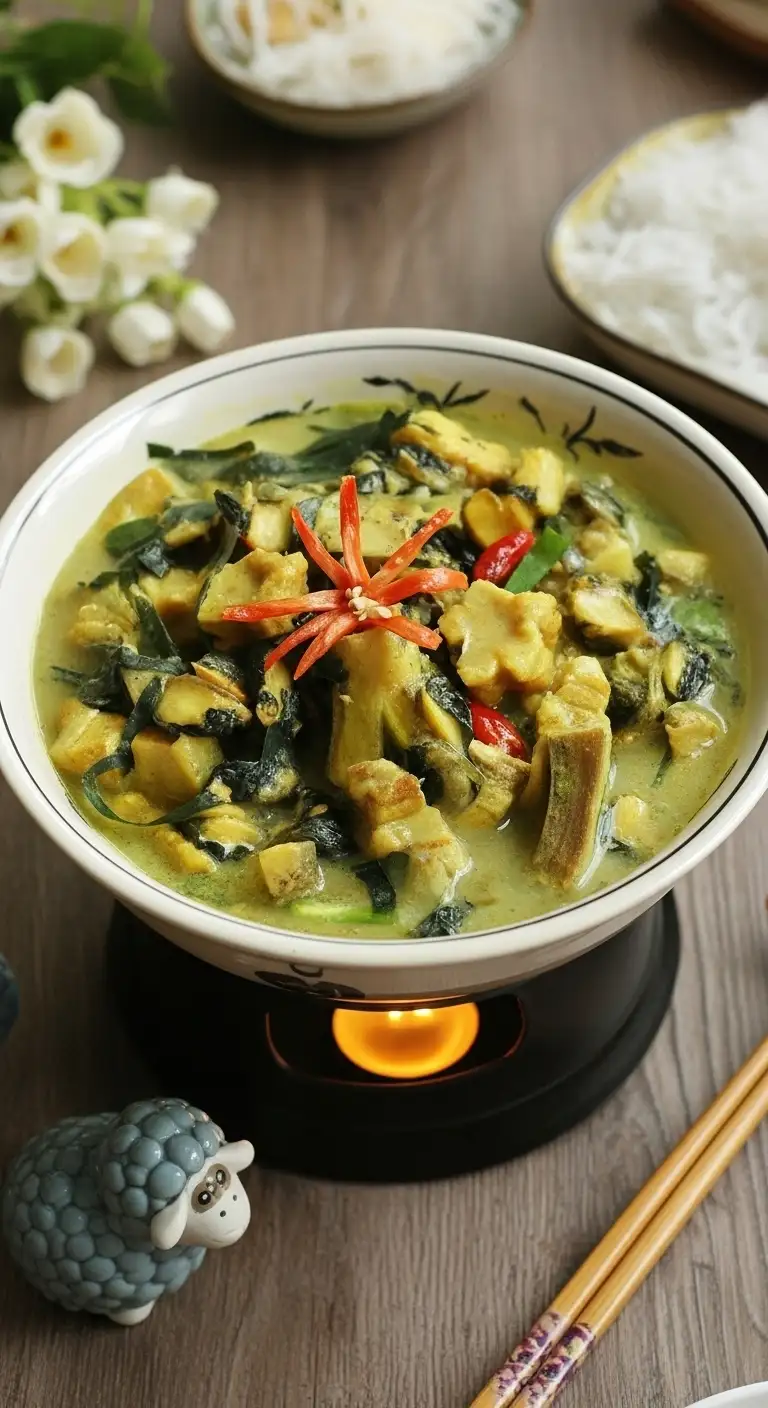
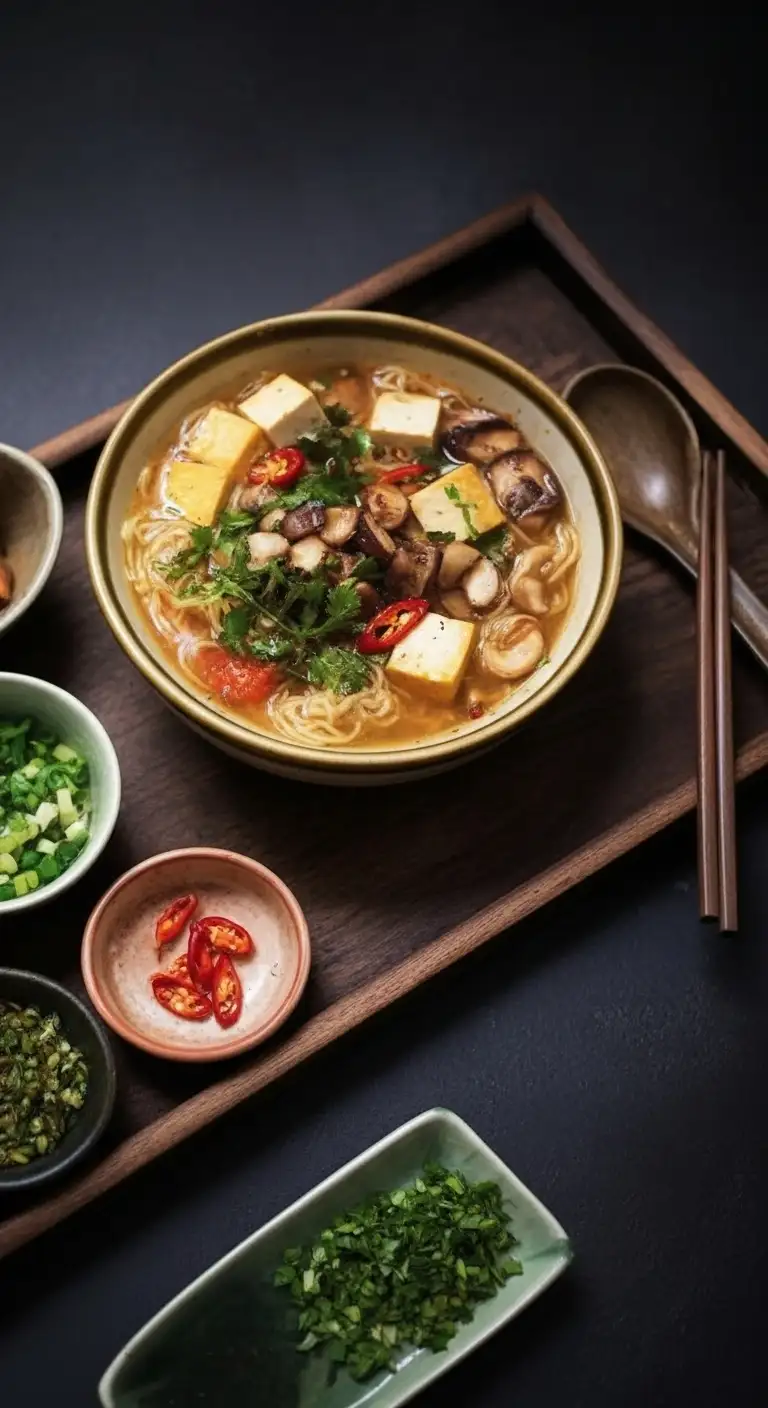
Bún Ốc (pronounced “Boon Oak”), or Snail Vermicelli Soup, is a distinctive and beloved noodle dish originating from Hanoi, Northern Vietnam. It stands out from its counterparts like Phở and Bún Chả with its unique, tangy-sour broth and the chewy texture of its main protein: freshwater snails (ốc).
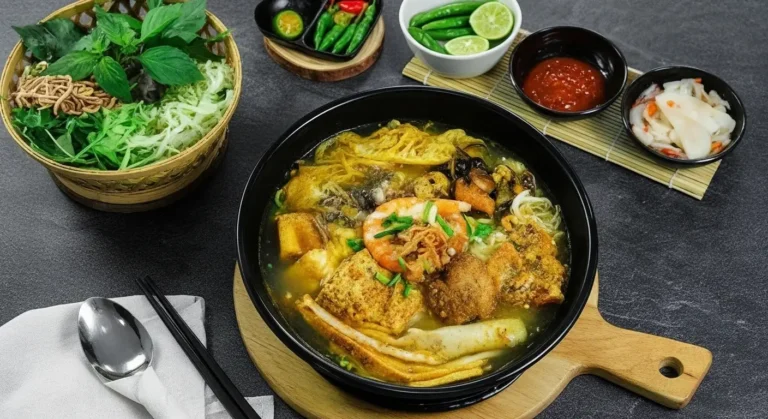
Bún Ốc: The Basics
The Broth: The heart of Bún Ốc is its vibrant, clear, yet robust broth. It achieves its characteristic flavor from a long simmer of pork or chicken bones combined with a generous amount of tomatoes and rice vinegar (giấm bỗng is often used in Hanoi). The result is a savory, sour, and subtly sweet flavor profile, often brightened with a touch of chili oil.
The Noodle (Bún): It uses thin, round rice vermicelli noodles.
The Snails (Ốc): Freshwater snails are carefully prepared, cleaned, boiled, and then often pan-fried with aromatics like garlic, lemongrass, and turmeric before being added to the soup. The snails provide a unique, slightly rubbery and chewy texture that is highly prized.
The Toppings: A traditional bowl is typically topped with:
The Snails (Ốc): The star of the dish.
Fried Tofu (Đậu Phụ Rán): Cut into squares and fried until crispy.
Tomatoes: Cooked wedges that provide color and additional tanginess.
Aromatics: Freshly chopped green onions, cilantro, and often Vietnamese perilla (tía tô).
Optional Proteins: Some versions include slices of lean beef (thịt bò) or Vietnamese pork sausage (giò lụa).
Variations and Types of Bún Ốc
The dish is celebrated for its duality, offering a hot, steamy experience and a lighter, chilled version:
Bún Ốc Nóng (Hot Snail Noodles):
This is the standard, most common version, especially popular in the cool winter months.
The noodles and toppings are submerged in piping hot, flavorful broth.
Key Feature: The warmth and steam emphasize the savory and sour notes of the soup.
Bún Ốc Nguội (Cold Snail Noodles):
A unique variation traditionally enjoyed in the summer.
The noodles are served separately on a plate. The broth is served cold and highly concentrated with vinegar and chili.
Key Feature: The noodles are dipped into the chilled broth before eating. It is a refreshing, light, and tangy meal.
Bún Riêu Ốc (Crab and Snail Noodles):
A delicious hybrid that combines the tangy-sour broth base of Bún Ốc with the savory freshwater crab paste (riêu cua) that is typically found in Bún Riêu. This provides a richer, more umami-forward flavor.
Chả Ốc (Snail Cakes):
Some vendors, particularly in Hanoi, offer snail cakes (minced snail mixed with pork and herbs) as a special, chewy topping instead of, or in addition to, the whole snails.
How to Eat Bún Ốc
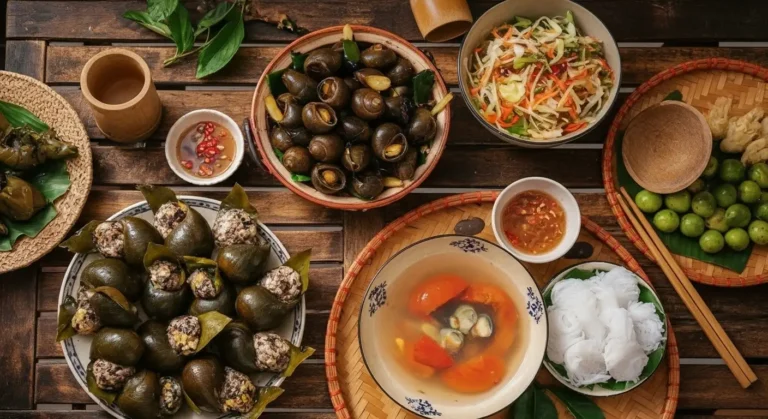
Bún Ốc is designed to be customized, with a mix of fresh herbs and seasonings that allow the diner to perfect the sweet-sour-spicy balance.
Add Greens: Toss the generous plate of fresh herbs (perilla, mint, lettuce, sometimes banana blossom) into your bowl to add crunch, freshness, and strong aromatics.
Adjust the Flavor: The bowl is typically served with lime wedges, chili oil/paste, and often mắm tôm (fermented shrimp paste) on the side.
Acidity: Squeeze the lime and add extra vinegar (often available in a jar with sliced garlic and chili) to enhance the broth’s signature tanginess.
Spice: Add chili oil to your desired level of heat.
Umami (Optional): Add a small dollop of mắm tôm and stir it in for a powerful, pungent layer of umami, which is traditional in Hanoi (and optional for those unfamiliar with the flavor).
Mix and Enjoy: Mix the noodles and toppings well to incorporate the herbs and condiments, then enjoy the balance between the hot, sour broth, the slippery noodles, and the satisfying chew of the snails.
Regional Differences
Bún Ốc is fiercely protected as a Northern Vietnamese dish, specifically a Hanoi icon. While it is sold throughout the country, the authentic essence is Northern.
| Region | Regional Culinary Style | Bún Ốc Interpretation | Local Perspective |
|---|---|---|---|
| Northern Vietnam (Hanoi) | Savory, clean, and mildly seasoned, with a prominent sourness. | The Authentic Standard. The broth's defining characteristic is its tangy sourness from rice vinegar (giấm bỗng) and tomatoes, with a refined savory base. Bún Ốc Nguội (Cold Snail Noodles) is a unique feature of the capital. | It is a deeply traditional, iconic street food, often eaten for breakfast or lunch. |
| Central Vietnam | Bold, spicy, and savory-funky, often with heavier spicing. | Rare/Adapted. Bún Ốc is not a native Central dish. If found, it may feature a spicier kick, thicker broth, or regional herbs, but it is not a staple. | Central Vietnam boasts its own array of spicy, complex noodle soups like Bún Bò Huế. |
| Southern Vietnam | Sweet, rich, and heavily seasoned, with generous portions. | Sweeter Adaptation. Bún Ốc is available, particularly in Ho Chi Minh City, often served by vendors originally from the North. The broth, however, is frequently sweeter than the Hanoi version to suit the Southern palate. Toppings are often more abundant (e.g., more pork, blood cubes, or vegetables). | It is often seen as a popular import from the North, with its unique sourness providing a contrast to local, sweeter noodle dishes. |