
Navigating foreign currency exchange can often be a source of anxiety, but in Vietnam, it’s surprisingly straightforward—provided you know the local secrets. The official currency is the Vietnamese Đồng (VND), and while the sheer number of zeroes can be intimidating, understanding the best practices for converting your home currency (specifically USD, which is universally accepted for exchange) into Đồng will save you time and ensure you get the most value for your money.
This guide focuses on the most favorable exchange methods, particularly for travelers coming from the top five most frequent visiting countries whose currencies are easily converted in Vietnam: the US, South Korea, China, the UK, and Australia.
1. The Golden Rule: Bring USD and Exchange Locally
For most international travelers, the most advantageous strategy is not to exchange your local currency (EUR, KRW, CNY, GBP, AUD, etc.) directly into VND before you leave home. Instead:
Bring Clean USD Banknotes: The US Dollar is the preferred foreign currency for local exchange shops in Vietnam. Bring crisp, clean, high-denomination notes ($50s and $100s). Crucially, $100 bills often receive a slightly better exchange rate than smaller bills.
Exchange On Arrival: The best rates are consistently found within Vietnam, not at your home airport or bank.
2. Where to Exchange: Comparing Local Venues
The rate difference between the best and worst exchange venues can be significant, so choosing wisely is key.
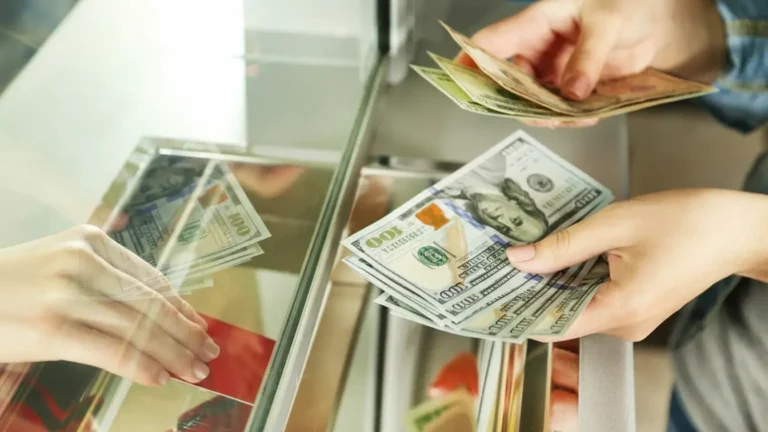
A. The Best Rates: Local Gold Shops and Jewelry Stores
In major tourist cities, specific gold and jewelry shops (often referred to as Tiệm Vàng) unofficially function as currency exchanges, offering the most competitive rates.
Hanoi: Look near the Old Quarter, particularly Ha Trung Street.
Ho Chi Minh City: The gold shops near Ben Thanh Market (specifically in the area around Lê Thánh Tôn Street) are famous for offering rates that often beat the banks.
Tip for Top 5 Visitors: These shops readily exchange major currencies (USD, AUD, GBP, EUR, KRW, CNY) but will still give you the best rate if you first convert your home currency to USD and then exchange the USD for VND.
B. The Mid-Range Option: Banks
Major banks like Vietcombank, Sacombank, and Eximbank offer reliable and official exchange services.
Pros: Safe, official, and transparent.
Cons: Rates are typically slightly lower than the gold shops, and queues can be long. This is a good fallback option if a gold shop is not nearby.

C. The Last Resort: Airports and Hotels
While convenient, these places should be avoided for large exchanges unless absolutely necessary.
Airport Kiosks: Exchange a small amount ($50–$100) immediately upon arrival for transport, but save the bulk of your exchange for the city center.
Hotels: Hotels offer the worst rates but are useful for exchanging tiny amounts if you are stuck.
3. The ATM Option: When to Use Debit Cards
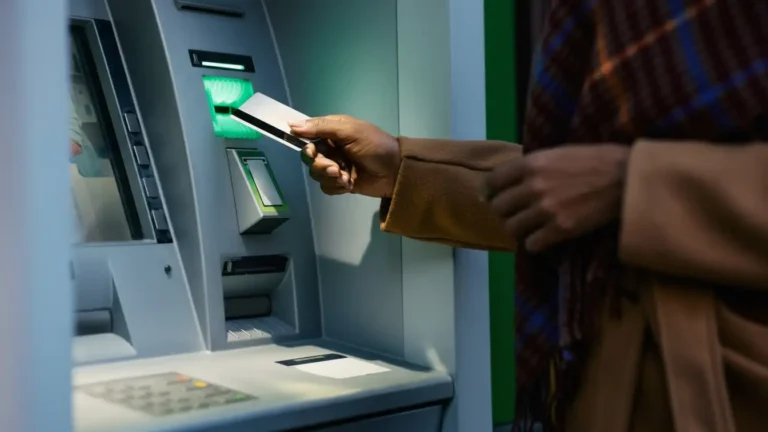
ATMs are widely available in cities and offer an excellent solution for getting local currency, especially if your bank offers low or no foreign transaction fees.
Fees to Watch Out For:
Your Bank’s Fee: Check if your home bank (US, UK, AUS, etc.) charges an international ATM fee.
Vietnamese ATM Fee: Local banks charge a transaction fee, usually VND 40,000–60,000 (approx. $1.60–$2.50) per withdrawal.
Best ATM Options: Look for ATMs with the highest withdrawal limits to minimize fees. Banks like Agribank, BIDV, or Citibank (if you have an account) often allow larger withdrawals (VND 3,000,000 to 5,000,000) than smaller local machines.
Decline DCC: Always choose to be charged in the local currency (VND), not your home currency. This avoids the terrible rates offered by Dynamic Currency Conversion (DCC).
4. The "Zeroes" Problem: Quick Calculation Tip
The sheer quantity of zeroes in the Vietnamese Đồng can be overwhelming. Here is a simple, effective trick to quickly estimate the USD equivalent.
The approximate exchange rate hovers around VND 24,500 for $1 USD.
The VND Calculation Shortcut (Based on $1 USD ≈ VND 24,000):
Drop Three Zeroes: Take the price in VND and remove the last three zeroes (e.g., VND 240,000 becomes 240).
Divide by 2.4 (or just 2 for a quick estimate):
Accurate: $240 ÷ 24 = 10$. (The price is $10 USD).
Fast Estimate (Easiest): $240 ÷ 2 ≈ 120. (The price is slightly less than $120 USD).
Example: You see a souvenir priced at VND 75,000.
Drop three zeroes: 75
Fast Estimate: $75 ÷ 2 = 37.5$
Conclusion: The price is roughly $3.50 USD. (The actual price is about $3.06, so the estimate is close enough for quick decision-making).
This trick works best with $1 USD conversions, but the principle can be applied to other major currencies (e.g., divide by 30 for EUR/GBP, or a slightly different number for AUD/KRW/CNY based on the daily cross-rate).
5. Essential Money Safety Tips
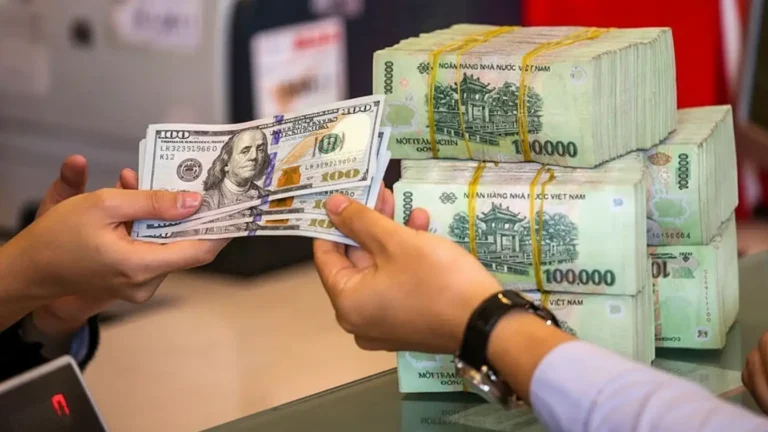
Small Denominations: After exchanging, request plenty of small bills (VND 50,000 and 100,000) for street food and small purchases. Vendors often don’t have change for large VND 500,000 notes.
Differentiating Notes: The VND 20,000 and 500,000 notes are both a blue-green color and look similar in poor light. Double-check before handing over a large bill!
Keep Cash Secure: Use a money belt or zippered inner pocket. Avoid flashing large wads of cash, especially in crowded markets or on the street.
By prioritizing exchanging crisp USD at gold shops and using the simple calculation trick, you can quickly become a savvy financial traveler, ensuring more of your hard-earned money goes toward enjoying Vietnam, not wasted on poor exchange rates.